

Survival Squid games are becoming a reality in the modern world. In case of victory, the best one gets a cash prize and recognition. Many mobile games have been created on the topic of survival, where each player tested fate, endurance, and their own health. There will be only one winner in a Squid Game Challenge.
Welcome to Squid Challenge, a heart-pounding survival game developed by OneTwoPlay that brings the tension and excitement of the famous “Green Light, Red Light” game to your browser. Based on the cultural phenomenon that captivated millions worldwide, this game tests your reflexes, patience, and nerve. One wrong move, and you are out. Only the fastest, most disciplined player will survive.
This comprehensive guide covers everything you need to know about Squid Challenge—gameplay mechanics, winning strategies, common mistakes, and why this simple yet addictive game has become a favorite among fans of high-stakes survival challenges.
What Is Squid Challenge? An Overview
Squid Challenge is a reaction-based survival game inspired by the iconic “Green Light, Red Light” game from the worldwide hit series. The premise is simple: you must move toward the finish line when the light is green and freeze completely when the light turns red. Any movement during the red light means instant elimination.
But do not let the simple rules fool you. The game tests your reflexes, your ability to stay calm under pressure, and your capacity to overcome the natural human urge to move. The tension builds with every step. The finish line inches closer. The lights change at unpredictable intervals. One twitch, one flinch, one premature step—and you are gone.
The game captures the essence of survival: only one winner emerges from a field of competitors. Your fate rests entirely on your own nerve and timing.
Why Squid Challenge stands out:
- High-stakes gameplay – One mistake ends your run
- Simple but challenging – Easy to understand, hard to master
- Short play sessions – Rounds last 1-3 minutes
- Addictive “one more try” – Each failure feels like you could have done better
- Authentic atmosphere – Captures the tension of the source material
- Play anywhere – Browser-based with no download required
Core Gameplay Mechanics
The Basic Setup
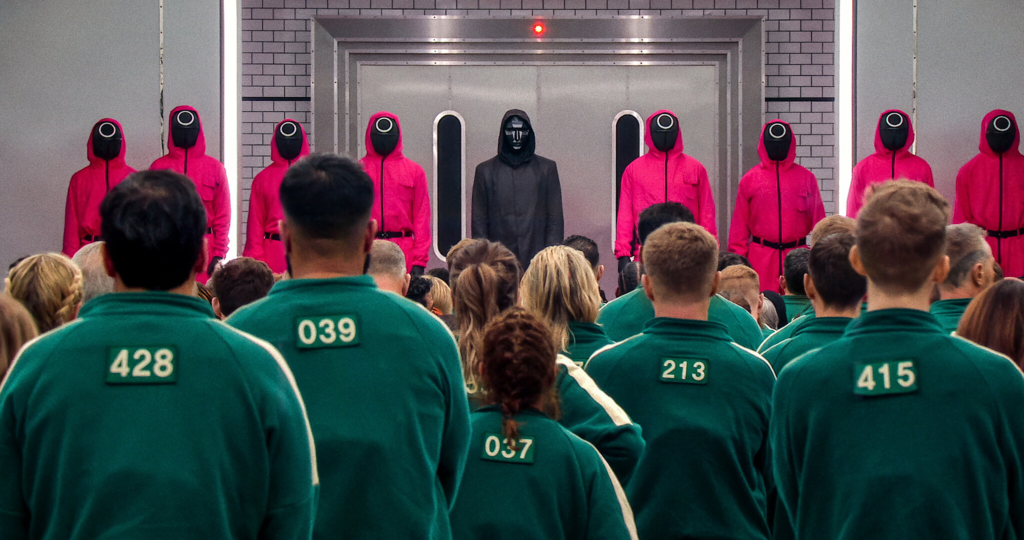
You are one of many competitors (or alone, depending on version) standing at a starting line. In the distance, you see a finish line. Between you and safety is open ground. A giant doll (or light system) faces you, watching for movement.
The Rules
The rules are brutally simple:
| Light Color | Action |
|---|---|
| Green Light | You may move forward |
| Red Light | You must stop completely. Any movement = elimination |
That is it. No complicated controls. No power-ups. No second chances.
Controls
| Platform | Control Method |
|---|---|
| Desktop (PC) | Use mouse to move (click and hold to move forward) |
| Mobile (Phone/Tablet) | Use finger to move (touch and hold to move forward) |
| Movement type | Hold to move forward; release to stop |
| Jumping (Level 1) | Some versions include jumping; use same input method |
The control scheme is designed to be intuitive. You press/hold to move, release to stop. Your character moves as long as you hold the button. This direct mapping between input and movement creates immediate tension—the moment you see the light change to red, you must release instantly.
Level 1: Green Light, Red Light
The first level is the classic game. You start at the baseline. The finish line is ahead. The light cycles between green and red at random intervals. Your goal is to reach the finish line before you are eliminated.
Progression: Each successful round gets harder. The light cycles become faster. The intervals between changes shorten. The distance to the finish line may increase.
Elimination
If you move (or are still moving) when the light turns red, you are eliminated. The game ends immediately. You must start over from the beginning.
No continues. No extra lives. One mistake and you are out.
Winning
Reach the finish line without being eliminated. The game announces your victory. You may unlock subsequent levels or simply replay for a better time.
Subsequent Levels (If Implemented)
Some versions of Squid Challenge include additional levels beyond Green Light Red Light:
Level 2: Honeycomb
- Objective: Cut out a shape from a honeycomb candy without breaking it
- Controls: Trace the shape carefully with your mouse/finger
- Elimination: Breaking the shape or taking too long
Level 3: Tug of War
- Objective: Pull harder than the opposing team
- Controls: Rapid clicking or button mashing
- Elimination: Being pulled over the line
Level 4: Marbles
- Objective: Win your opponent’s marbles through a guessing game
- Controls: Choose odd/even, high/low, etc.
- Elimination: Losing all your marbles
Level 5: Glass Bridge
- Objective: Choose the correct glass panel to step on (toughened vs. normal)
- Controls: Click on left or right panel
- Elimination: Stepping on a normal glass panel (it breaks)
Note: Not all versions include all levels. The core experience is Level 1 (Green Light Red Light). Check your version for additional content.
Winning Strategies
Beginner Strategies
1. Move in small increments. Do not hold the button continuously. Tap-tap-tap forward. This reduces your momentum—if the light turns red mid-move, you can stop faster.
2. Focus on the light, not your character. The light is the only thing that matters. Peripheral vision is your friend. Keep your eyes on the indicator, not on your avatar.
3. Anticipate the change. After a few cycles, you will notice patterns (though the game randomizes). The longer a green light lasts, the higher the probability it will switch soon. Be ready.
4. Do not jump (unless required). Jumping takes longer to land. If the light turns red while you are in the air, you are eliminated. Jump only if the level requires it.
5. Stay calm. Anxiety causes twitching. Take deep breaths. Relax your hand. A steady hand survives longer than a nervous one.
Intermediate Strategies
1. Use “micro-movements.” Instead of moving continuously, move a tiny distance, stop, assess, move again. This gives you more opportunities to freeze mid-stride.
2. Learn the timing window. In most versions, there is a brief grace period after the light turns red during which you can still stop without penalty. However, do not rely on this. Stop as soon as you see the change.
3. Watch for audio cues. The game may have sound effects (a voice saying “Green light” or “Red light,” or a chime). Audio cues are faster than visual cues. Close your eyes? No—but use both senses.
4. Position your finger for quick release. Do not grip the mouse/phone tightly. Rest your finger lightly on the button. Release should be instantaneous.
5. Rehearse mentally. Before starting, visualize yourself moving, stopping, moving, stopping. Mental rehearsal improves real performance.
Advanced Strategies
1. Develop “red light reflex.” Train yourself to release the button the moment you see the color change, without thinking. This requires practice. Play many rounds.
2. Ignore other competitors. Do not watch them. Do not try to mimic them. They may make mistakes. Focus only on the light and your own movement.
3. Sprint the last segment. Once you are within 2-3 steps of the finish line, the risk of elimination is worth the reward. Sprint across. The light is unlikely to change in that split second.
4. Use “false starts” to bait the light. Intentionally move slightly during a red light early in the game (when elimination resets quickly) to learn the timing. Not recommended for serious attempts.
5. Perfect your start. The first movement is crucial. As soon as the first green light appears, move immediately. Hesitation costs time.
Common Mistakes and How to Avoid Them
Mistake 1: Holding the button continuously. Continuous movement means continuous risk. If the light turns red mid-move, you cannot stop instantly. Use short bursts instead.
Mistake 2: Looking away from the light. Players glance at their character, at the finish line, at other competitors. Bad. Keep your eyes on the light indicator.
Mistake 3: Panic when the light changes. When the light turns red, some players freeze with the button still pressed. Train your reflex to release, not to freeze.
Mistake 4: Moving during the red light. This seems obvious, but in the heat of the moment, players see the finish line close and think “just one more step.” That step eliminates you.
Mistake 5: Not using audio cues. If the game has sound, use it. Audio reaches your brain faster than visual. Do not play muted.
Mistake 6: Playing when tired or distracted. Squid Challenge requires focus. Do not play while watching TV, talking to someone, or half-asleep.
Mistake 7: Getting overconfident. “I have made it this far; I can relax.” No. The hardest part is often the final steps. Stay vigilant.
Frequently Asked Questions (FAQs)
1. Is Squid Challenge really free to play?
Yes, Squid Challenge is completely free. You can play the full game without spending any money. The embedded version may include occasional ads, but these appear between attempts, not during gameplay.
2. Do I need to download anything to play?
No download or installation is required. Squid Challenge is an HTML5 browser game that runs directly in your web browser. Just click and play.
3. Can I play on my phone or tablet?
Yes. The game is fully compatible with iOS and Android mobile devices. On mobile, you control the game by touching and holding to move, releasing to stop.
4. How do I move in the game?
- Desktop: Click and hold the left mouse button to move forward. Release to stop.
- Mobile: Touch and hold the screen to move forward. Release to stop.
Some versions require dragging your finger/mouse in the direction of movement. Check your specific version.
5. What happens if I move during a red light?
You are eliminated immediately. The game ends. You must start over from the beginning. There are no second chances.
6. How many levels are in Squid Challenge?
The core experience is Level 1 (Green Light Red Light). Some versions include additional levels: Honeycomb, Tug of War, Marbles, and Glass Bridge. Check your version’s level selection screen.
7. Is there a time limit?
No. The only limit is your own survival. Take as long as you need to reach the finish line. However, the random light changes create urgency.
8. Can I play with keyboard controls?
The standard version uses mouse/touch only. Some adaptations may support keyboard (arrow keys or WASD). Check the game’s control settings.
9. Why is the game called Squid Challenge?
The game is inspired by the “Squid Game” series, in which contestants compete in deadly children’s games for a cash prize. “Squid Challenge” is the common name for these types of survival games.
10. Is there a jump button?
Level 1 (Green Light Red Light) typically does not require jumping. However, some versions include obstacles that require jumping. The control method is the same (click/tap and hold to move; jump may be a separate button).
11. How do I win Squid Challenge?
Reach the finish line without being eliminated. The game will announce “Winner” or “Victory.” You may then unlock the next level or be invited to replay.
12. Can I save my progress?
Most versions do not save progress between sessions because games are short (1-3 minutes). You simply start a new game each time you play.
13. Is there a multiplayer mode?
The standard version is single-player (you compete against AI-controlled opponents or play alone). However, the tension comes from the game itself, not from other players.
14. What is the hardest part of Green Light Red Light?
The final few steps. Players often get impatient and try to rush. The light is most likely to change when you are close to the finish line (psychological pressure). Stay disciplined.
15. Does the game have sound effects?
Yes. Most versions include voice cues (“Green light,” “Red light”) and ambient tension music. Sound is highly recommended—audio cues are faster than visual.
16. Why do I keep losing?
Common reasons:
- You are moving continuously (use short bursts)
- You are looking away from the light indicator
- You are panicking and forgetting to release the button
- You are playing while distracted
Practice. Slow down. Focus.
17. How long does a typical game last?
Most successful runs take 1-3 minutes. Failed runs are much shorter (10-30 seconds before elimination). The short playtime encourages “one more try.”
18. Can I cheat?
Cheating (using auto-clickers, scripts) defeats the purpose of the game. The challenge is testing your own reflexes. There are no leaderboards, so cheating only ruins your own experience.
19. Is there a practice mode?
Most versions do not have a separate practice mode. The main game is the practice. Fail, learn, try again.
20. What is the secret to winning?
There is no secret. The winning strategy is: watch the light, move in short bursts, release instantly when it turns red, stay calm, practice. That is it.
The Psychology of Green Light Red Light
Squid Challenge is not just a test of reflexes—it is a test of psychology.
Impulse Control
The game forces you to override your natural impulse to keep moving. When the finish line is close, every fiber of your being wants to sprint. You must consciously stop.
Attention Management
Your focus must remain on the light indicator, not on your character, not on the finish line, not on anything else. This sustained attention is mentally exhausting.
Stress Inoculation
Repeated exposure to the pressure of “one mistake and you lose” builds stress tolerance. Players who succeed learn to perform under pressure.
Frustration Tolerance
Losing repeatedly is frustrating. Players who persist learn to accept failure, reset, and try again without emotional distress.
Why Squid Challenge Became a Cultural Phenomenon
The original Squid Game series tapped into universal themes: economic desperation, childhood nostalgia corrupted by adult violence, and the tension between cooperation and competition. The Green Light Red Light game, in particular, became iconic because it is so simple yet so terrifying.
The mobile and browser games that followed captured that tension in a playable form. Players experience the same fear, the same focus, the same adrenaline—without the actual risk of death. It is survival horror distilled to its purest essence: one rule, one mistake, one chance.
Conclusion: Test Your Nerve
Squid Challenge is brutally simple and brutally unforgiving. One mistake ends your run. No second chances. No continues. Just you, the light, and the finish line.
And yet, that simplicity is why it is addictive. Each failure feels like your fault—because it is. You moved when you should have stopped. You hesitated when you should have gone. You looked away for a split second. The game does not cheat. It does not lie. It only watches.