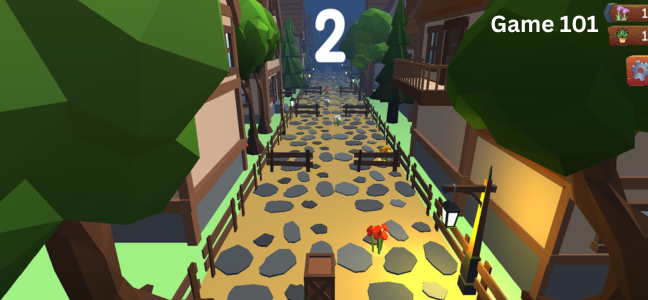

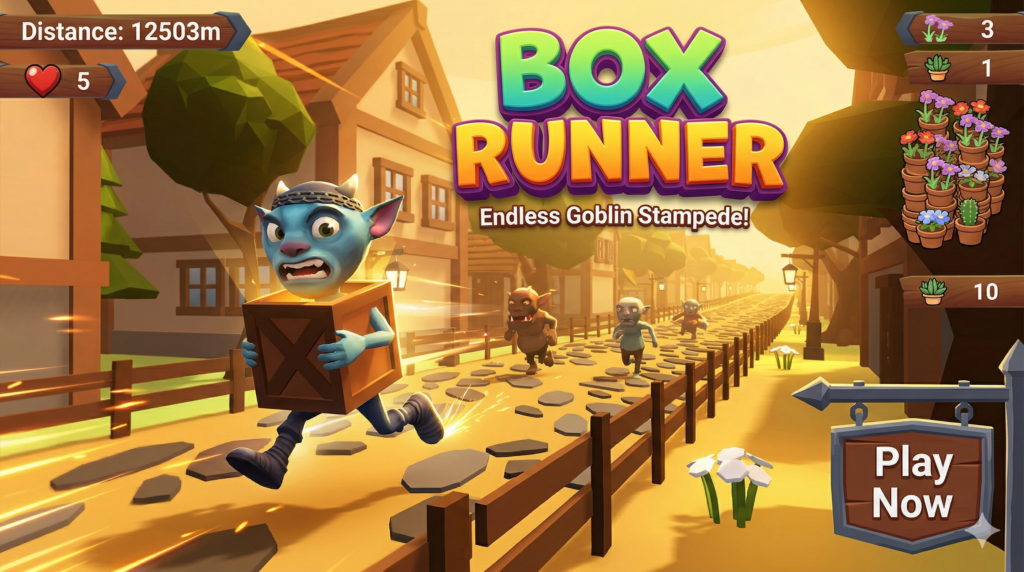
Box Run is a fun puzzle game. Players need to find the most appropriate path for the box to reach the destination. This journey can be enjoyed by anyone looking for a challenging adventure.
Welcome to Box Run, a deceptively simple yet deeply challenging puzzle game developed by BPTop. At first glance, it looks like a basic maze game: move a box to a target. But beneath this simple premise lies a world of spatial reasoning, strategic planning, and satisfying “aha!” moments.
This comprehensive guide covers everything you need to know about Box Run—its core mechanics, level progression, solving strategies, common pitfalls, and why this game has become a favorite among puzzle enthusiasts.
What Is Box Run? An Overview
Box Run is a path-finding puzzle game where you guide a box across a grid to reach a designated destination. The challenge lies not in moving the box—that is simple—but in finding the optimal path. Some levels have obvious routes. Others require you to think several moves ahead, backtrack, and sometimes even move away from the goal to create space for the final approach.
Core features at a glance:
| Feature | Description |
|---|---|
| Genre | Puzzle / Path-finding |
| Objective | Move box to destination |
| Core mechanic | Grid-based movement |
| Difficulty | Progressive, from easy to expert |
| Controls | Click/tap and drag |
| Platform | Browser-based, mobile compatible |
Why this game stands out:
| Differentiator | Benefit |
|---|---|
| Simple concept | Anyone can understand the goal |
| Deep strategy | Requires planning, not luck |
| Progressive difficulty | Gentle learning curve |
| Satisfying solutions | Each solved level feels earned |
| Relaxing pace | No timers, no pressure |
| Free to play | No cost to enjoy |
Who is this game for?
- Puzzle game enthusiasts
- Fans of classic grid-based puzzles
- Players who enjoy games like Sokoban or Rush Hour
- Anyone looking for a relaxing mental workout
- Kids and adults alike
The Core Mechanic: Finding the Path
Basic Movement
The game presents a grid. A box sits somewhere on the grid. A destination marker (often a star, flag, or colored tile) sits elsewhere. Your job is to move the box to that destination.
The Challenge
Unlike character-based maze games where the player moves freely, Box Run likely restricts movement to sliding the box until it hits an obstacle. This is the classic “block pushing” mechanic made famous by games like Sokoban. You cannot simply walk the box to the goal—you must slide it along clear paths, sometimes moving it away from the goal to get around corners.
Grid Types
| Grid Type | Description |
|---|---|
| Open grid | No obstacles, trivial |
| Walled grid | Walls create corridors |
| Holes/voids | Box cannot move into empty space |
| Tiles | Different colored tiles may have different rules |
Movement Rules
| Rule | Implication |
|---|---|
| Box slides until stopped | Cannot stop mid-grid |
| Obstacles block movement | Walls and other blocks |
| Destination can be anywhere | Not always on the edge |
| Multiple boxes possible | Some levels have more than one |
Level Progression and Difficulty Curve
Early Levels (Tutorial)
| Feature | Description |
|---|---|
| Small grid | 4×4 or 5×5 |
| No obstacles | Straight line to goal |
| Goal | Teach basic movement |
| Success rate | Near 100% |
Intermediate Levels
| Feature | Description |
|---|---|
| Larger grid | 6×6 to 8×8 |
| Walls introduced | Simple corridors |
| Goal | Teach turning and planning |
| Success rate | 70-80% |
Advanced Levels
| Feature | Description |
|---|---|
| Large grid | 10×10 or more |
| Complex mazes | Multiple obstacles |
| Dead ends | Traps that require backtracking |
| Goal | Teach multi-step planning |
| Success rate | 40-60% |
Expert Levels
| Feature | Description |
|---|---|
| Maximum grid size | Up to 15×15 |
| Multiple boxes | Coordinate multiple objects |
| Limited moves | Par or minimum moves challenge |
| Tight constraints | Only one valid path |
| Success rate | 10-30% |
Strategies for Success
Beginner Strategies
| Strategy | Why It Helps |
|---|---|
| Look at the destination | Know where you are going |
| Identify obstacles | Walls determine possible paths |
| Move toward goal generally | Avoid moving away unnecessarily |
| Restart if stuck | Fresh approach often helps |
Intermediate Strategies
| Strategy | Why It Helps |
|---|---|
| Work backward from goal | Imagine the box at the destination, then reverse |
| Look for bottlenecks | Narrow passages limit options |
| Clear dead ends first | Avoid getting trapped |
| Plan 3-4 moves ahead | Anticipate where the box will be |
Advanced Strategies
| Strategy | Why It Helps |
|---|---|
| Create space | Move away to create turning room |
| Use corners | Corners are natural stopping points |
| Count moves | Some levels have minimum move challenges |
| Memorize successful paths | For recurring level types |
Expert Strategies
| Strategy | Why It Helps |
|---|---|
| Perfect sequencing | Order of moves matters critically |
| Optimize routes | Shortest path is not always obvious |
| Multiple box coordination | Move boxes in correct order |
| Pattern recognition | Learn common level designs |
Common Mistakes and How to Avoid Them
| Mistake | Consequence | Prevention |
|---|---|---|
| Rushing | Miss obvious obstacles | Survey the whole grid first |
| Moving into corners | Getting stuck | Check if corner has exit path |
| Forgetting the goal | Wandering aimlessly | Keep destination in mind |
| Not using undo | Wasting time | Use reset/undo freely |
| Overthinking | Paralysis | Try a move; you can always reset |
Box Run vs. Similar Puzzle Games
| Game | Similarity | Difference |
|---|---|---|
| Sokoban | Box pushing | Box Run may have different grid dynamics |
| Rush Hour | Sliding puzzles | Rush Hour uses vehicles; Box Run uses single box |
| Boulder Dash | Pushing mechanics | More action-oriented |
| 2048 | Grid movement | Box Run is about path-finding, not merging |
Box Run occupies a specific niche: single-object path-finding with grid-based sliding.
Why Play Box Run?
For Puzzle Lovers
If you enjoy Sudoku, crosswords, or logic puzzles, Box Run offers a spatial variant. The satisfaction of finding the correct path after multiple attempts is genuine.
For Casual Gamers
Simple controls and no time pressure make the game accessible. Play for five minutes or an hour.
For Mobile Gamers
The game is compatible with iOS and Android, making it perfect for on-the-go play.
For Free, No-Download Play
Box Run runs in your browser. No installation, no account, no commitment.
The Psychology of Path-Finding Puzzles
Box Run engages several cognitive functions:
| Function | How the Game Engages It |
|---|---|
| Spatial reasoning | Visualizing paths on a grid |
| Planning | Thinking multiple moves ahead |
| Problem-solving | Finding solutions to constraints |
| Memory | Remembering dead ends |
| Persistence | Trying again after failure |
These mental exercises make Box Run both entertaining and beneficial for cognitive health.
Tips for Difficult Levels
When You Feel Stuck
| Tip | Why It Helps |
|---|---|
| Reset the level | Fresh perspective |
| Take a break | Return with clearer mind |
| Work backward | Start from goal and reverse |
| Try a random move | May reveal new possibilities |
| Look for symmetry | Symmetrical layouts have symmetrical solutions |
When You Keep Failing
| Observation | Implication |
|---|---|
| Same mistake | You have a blind spot; try different approach |
| Always trapped in corner | Avoid that corner entirely |
| Always one move short | You missed a shortcut or alternative path |
The “Most Appropriate Path” Concept
The game description emphasizes finding the “most appropriate path,” not just a path. This implies that some solutions are better than others:
| Path Quality | Description |
|---|---|
| Valid | Gets the box to the destination |
| Efficient | Uses minimal moves |
| Elegant | Avoids unnecessary detours |
| Appropriate | The intended solution |
Finding the most appropriate path requires thinking like the level designer, not just brute-force trial and error.
Frequently Asked Questions (FAQs)
1. Is Box Run really free to play?
Yes, Box Run is completely free. You can play the full game without spending any money. The embedded version may include occasional ads.
2. Do I need to download anything to play?
No download or installation is required. Box Run is an HTML5 browser game that runs directly in your web browser. Just click and play.
3. Can I play on my phone or tablet?
Yes. The game is fully compatible with iOS and Android mobile devices. Use touch to drag the box.
4. How many levels are in Box Run?
The exact number varies, but Box Run offers multiple levels with increasing difficulty. The game provides a substantial campaign.
5. What happens if I get stuck?
Try these strategies:
- Reset the level and start over
- Work backward from the goal
- Take a break and return later
- Look for online solutions as last resort
6. Is there a time limit?
No. Box Run has no timers. You can take as long as you need to plan each move.
7. Can I undo moves?
Most versions include an undo button. If not, you can reset the level.
8. Are all levels solvable?
Yes. Well-designed puzzle games ensure every level has at least one solution.
9. What is the hardest level?
Difficulty is subjective, but later levels with larger grids and multiple obstacles are most challenging.
10. Can I replay completed levels?
Yes, you can revisit any level you have solved.
11. Does the game have sound effects?
Some versions include sound effects for movement and level completion. Sound can be muted.
12. Is Box Run suitable for children?
Yes. The game contains no violence, no inappropriate content, and no scary elements. It is excellent for developing logical thinking.
13. How long does it take to complete Box Run?
Completion time varies:
- Quick solver: 2-4 hours
- Average player: 5-10 hours
- Casual play: Weeks of short sessions
14. Can I play with a mouse and keyboard?
Desktop play uses mouse clicks. Keyboard controls are not typically needed.
15. Does the game save my progress?
Progress is typically saved in your browser’s local storage. If you clear your cache, you may lose progress.
16. What is the grid size?
Grid sizes vary by level, ranging from small (5×5) to large (15×15 or more).
17. Are there multiple boxes?
Some advanced levels may require moving multiple boxes to destinations.
18. What does “most appropriate path” mean?
It means finding not just any solution, but the optimal or intended solution—the path that the level designer envisioned.
19. Is there a hint system?
Some versions include hints. If not, community forums may offer guidance.
20. Why is the game called Box Run?
The name describes the core action: a box running (moving) through a grid to reach its destination.
Conclusion: Find Your Path
Box Run proves that simple concepts can create compelling puzzles. The goal is straightforward: move the box to the destination. But achieving that goal requires careful observation, strategic planning, and sometimes the willingness to backtrack and try again.
The game respects your intelligence. It does not insult you with trivial early levels, nor does it frustrate with impossible later ones. The difficulty curve is gentle but genuine.
Key takeaways:
| Aspect | Summary |
|---|---|
| Genre | Path-finding puzzle |
| Objective | Move box to destination |
| Difficulty | Progressive, accessible |
| Platform | Browser, mobile |
| Cost | Free |
| Playtime | 5-10 hours |
| Verdict | Highly recommended for puzzle fans |
So find the most appropriate path. Guide the box to its destination. Enjoy the challenging adventure.